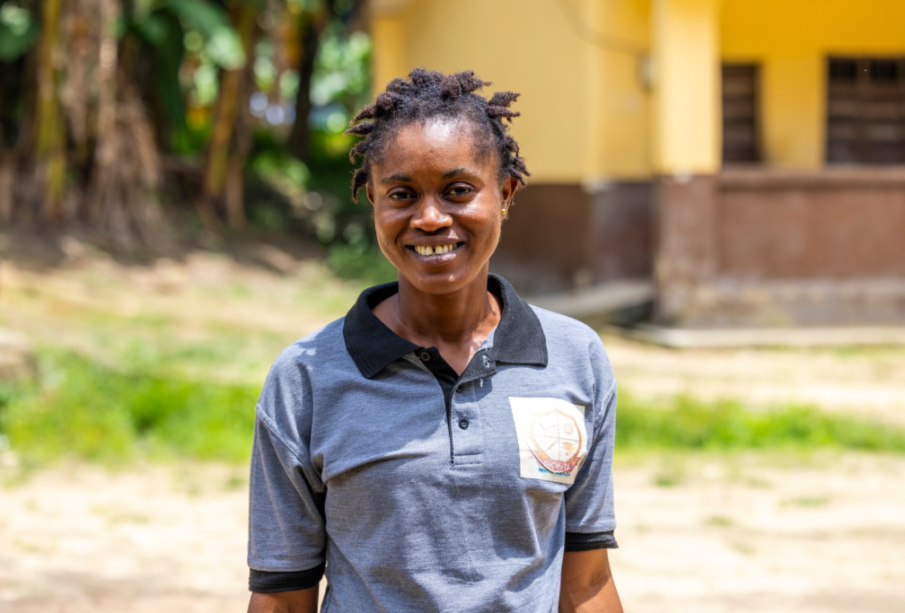
“Despite all the challenges, I love to teach and I like my job as a teacher. I am always happy when coming to school to teach my pupils,” says Mariatu Emmanuela Conteh.
As the Class 3 teacher at S.D.A. Primary School in Makali, Sierra Leone, Conteh is responsible for teaching every subject to her students. Yet her dedication extends far beyond the syllabus, demanding an extraordinary level of personal sacrifice every single day.
Her day begins long before dawn, preparing breakfast and taking care of her family before heading to school. Once there, she leads morning devotion, prepares her classroom, and guides her pupils through their lessons until the school bell rings at 2:30 PM. But for Conteh, the work is far from finished when the students head home.
At home, she turns to domestic responsibilities—preparing dinner for her family and caring for her children—before spending her late evening hours meticulously writing lesson notes for the next morning.
“I spend a lot of time in school. When I get home, I have to do my work, so there is not enough time for me to do anything,” she shares.
It is a relentless, demanding routine. Yet, through every hardship, Conteh is driven by an unwavering passion for her students and her calling.
Teaching Where Resources Are Scarce
Makali is a remote, last-mile community, where basic infrastructure is severely lacking and educational resources are extremely scarce.
Without essential materials provided, Conteh regularly spends her own modest funds to buy teaching aids, poster boards, and flashcards so her pupils don’t miss out on quality learning.
“I go the extra mile to get the materials I use to teach… so I can teach the children effectively,” she explains.
Conteh’s experience reflects a nationwide crisis across rural Sierra Leone. The recent Annual School Census revealed that 72% of schools in Sierra Leone lack electricity, while only 7% have functional libraries. In communities like Makali, residents also face severe shortages of clean drinking water and adequate healthcare facilities.
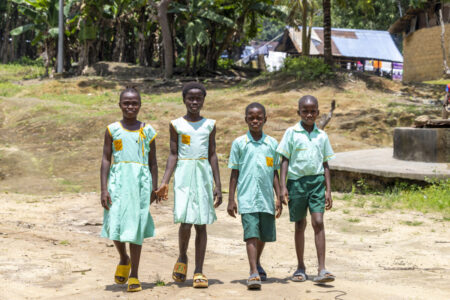
Some of Conteh’s students walking to school.
“Teaching in a last-mile community is very difficult because there are not enough materials for teaching. There is also no good hospital, no good drinking water, and no electricity,” Conteh notes.
When official supplies fail to arrive on time, teachers like Mariatu are forced to constantly innovate, improvising lessons out of thin air to keep their students engaged and hopeful.
A Teacher and A Mother
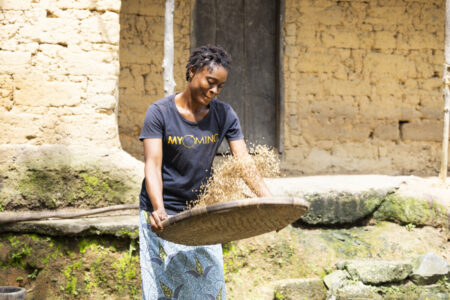
Conteh working on some food items for her home.
Conteh’s responsibilities do not stop with her pupils.
In addition to educating her class, Conteh is raising her own sons on a meager salary that barely stretches to meet basic household needs.
“My salary is not enough to take care of my sons because I have to buy school uniforms, bags, shoes, books, and provide lunch,” she shares. “Despite being a teacher, I am also a parent.”
And sometimes, the responsibilities of being a mother and a teacher overlap.
When pupils arrive at school hungry, Conteh frequently steps in, sharing her own food or money to ensure they have lunch. Her actions illustrate the profound responsibility carried by educators in remote areas—they are not just teachers, but caregivers, providers, and pillars of hope.
Despite the long days and financial pressures, Conteh continues to return to the classroom.
“I still come to school because the children come to school. That is why we are appealing for better conditions of service,” Conteh says. “Teaching in a last-mile community is all about sacrifice because you are cut off from many facilities… but whatever I face, I have to be patient and teach the children accordingly.”
Yet every morning Conteh returns, for her pupils, for her family, and because despite everything, she still loves teaching.
A Thank You to Those Who Invest in Teachers

Mariatu Emmanuela Conteh.
Teachers like Mariatu show what is possible when dedication meets purpose. But they cannot do it alone. Supporting education in Sierra Leone requires direct investment in the educators who give so much to their communities.
“We thank you so much for your support, and we ask you to continue supporting us,” Conteh emphasizes.
This mission is at the core of Schools for Salone’s upcoming It Takes A Teacher celebration in Seattle this October—an evening dedicated to uplifting rural educators and expanding teacher training and literacy resources across Sierra Leone.
Their stories show what happens when a teacher is willing to go the extra mile. And they remind us why teachers deserve the investment, support and recognition that allow them to do their best work.
You can empower dedicated teachers like Mariatu to transform lives. Secure your tickets to join us in Seattle, or make a donation today to support crucial teacher training and classroom resources across Sierra Leone.
Together, we can ensure every teacher has the support they need, and every child receives the education they deserve.




-
The Ultimate Beach Showdown: Diaspora Wars 2026 is Coming to Freetown!
Are you heading home to Sierra Leone for the holidays this December? ... -
-
-