How Vanessa Fisher Turned Her Love for Sierra Leone into A Children’s Book
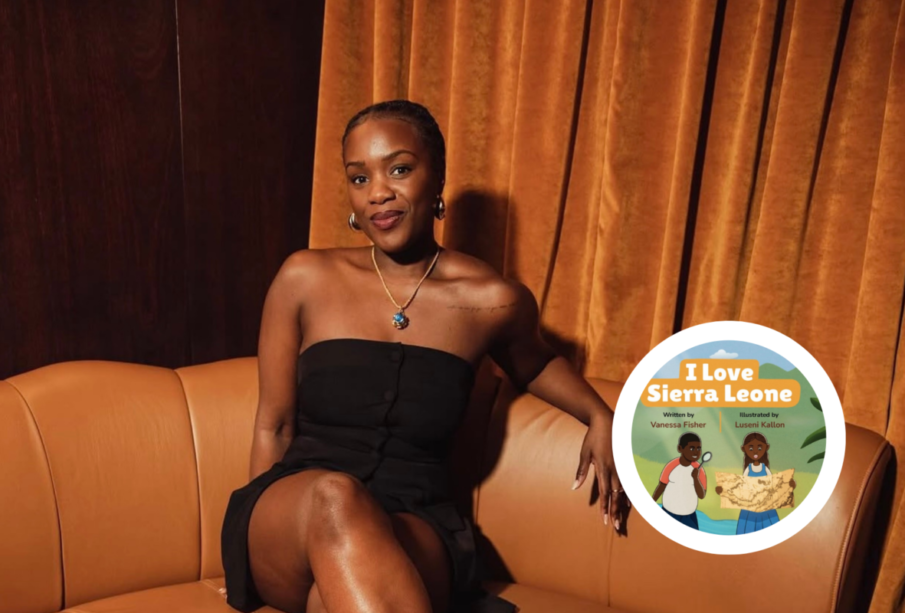

For author, Vanessa Fisher, 34, Sierra Leone has always been more than a country her parents came from. It was part of her childhood, her family life, and the language spoken at home.
Born and raised in London to Sierra Leonean parents, Fisher grew up speaking Krio and spent her childhood travelling to Sierra Leone, where she recalls memories filled with good food, laughter, and joy.
Years later, those memories and her desire to preserve her heritage have found a new expression in I Love Sierra Leone, her first children’s book. Written in both English and Krio and illustrated by Sierra Leonean artist Luseni Kallon, I Love Sierra Leone follows London-based twins Ballu and Abu as they learn about their heritage through stories of Sierra Leone shared by their parents and grandparents.
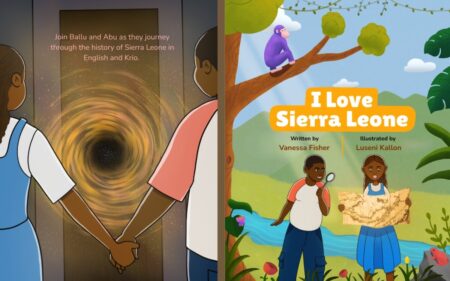
Some illustrations from I Love Sierra Leone.
The book introduces young readers to aspects of Sierra Leone’s history, culture and identity, touching on subjects including colonialism, slavery, unity and the ethnic groups that existed before the effects of colonization.
For Fisher, however, the book is about more than introducing children to history. It is about keeping a connection alive.
“As generations grow and cultures continue to blend, preserving that connection has become increasingly important to me. I Love Sierra Leone was created as a way of passing that heritage on; a bridge between the generations who came before and those still to come,” Fisher explained.
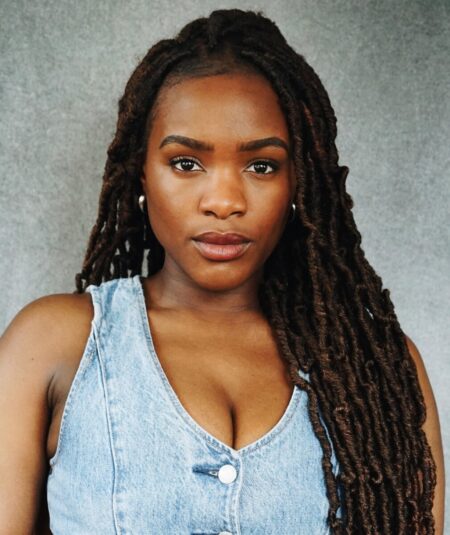
Vanessa Fisher, author of I Love Sierra Leone.
A Childhood Connection to Sierra Leone
Although Fisher was raised in London, Sierra Leone remained a constant presence in her life. Her first visit came when she was just six months old, and her parents continued taking her children to the country every December.
Because her parents spoke Krio, Fisher grew up fluent in the language, giving her a connection to Sierra Leone that long began before she started thinking about writing a book.
Her professional life, meanwhile, has been rooted in the performing arts. Fisher trained at The Urdang Academy in London and has worked as an actor since 2015, primarily performing in West End theatre productions across London and Toronto. She has also worked as a performing arts instructor and teacher in both the UK and Canada.
It was during the COVID-19 pandemic that her relationship with her heritage became the starting point for I Love Sierra Leone.
Fisher travelled to Sierra Leone to spend time with her father and grandparents. At the same time, conversations around the Black Lives Matter movement had brought questions of identity, culture, and the preservation of Black heritage into sharper focus.
“I decided to write a children’s book about the history of Sierra Leone to help myself and future generations stay connected to the culture,” Fisher said.
The idea to make the book bilingual came later. After taking an online Krio language course, Fisher found herself enjoying the process of learning how to read and write the language she has grown up speaking.
That experience helped shape what would become a central part of the book.
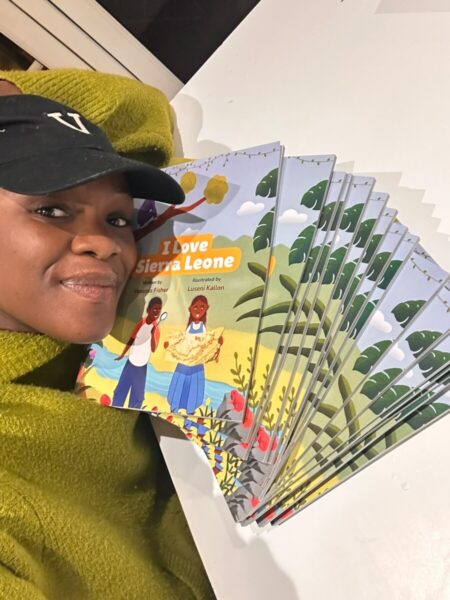
Fisher with copies of her book.
Bringing Sierra Leone to Young Readers
At the heart of I Love Sierra Leone are Ballu and Abu, twins who, like Fisher, are born and raised in London while maintaining a connection to Sierra Leone through their family.
Named after Fisher’s grandmother, Ballu and her twin Abu listen to stories about Sierra Leone from their parents and grandparents, providing a framework through which young readers can begin exploring their own heritage.
Fisher is clear that the book is not intended to be a complete account of Sierra Leonean history. Instead, she describes it as a starting point for children.
“It is designed to be a starting point for young children but it touches on colonialism, slavery, unity and the ethnic groups that existed way before the devastating effects of colonisation in a child friendly, digestible way.”
The book was initially written with Sierra Leonean children in the diaspora in mind, particularly those growing up away from the country their parents or grandparents call home. But Fisher hopes its reach extends much further.
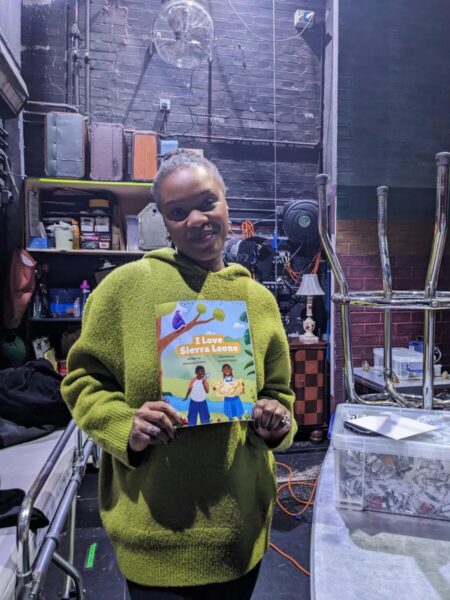
Fisher with her book, I Love Sierra Leone, back stage at the Stranger Things show.
Part of this decision comes from her own experiences of introducing people to her heritage.
“Very often when I tell people I am from Sierra Leone, they don’t know where it is nor do they know how to pronounce it and I want to change that,” Fisher explained.
Although the idea for I Love Sierra Leone began in 2020, the journey from first draft to finished book was far from straightforward.
In 2021, Fisher began looking for a Sierra Leonean illustrator who could help bring the story to life. A friend introduced her to Luseni Kallon and they began working together, completing the illustrations in 2022.
But as life returned to normal after the pandemic, the book was put on hold. Fisher returned to it in 2024, only to pause again. By 2026, she had decided it was time to finish what she had started.
“I made myself a promise that I wouldn’t go into 2027 with any unfinished projects, so here we are!”
The process also brought its own challenges. Writing about Sierra Leone’s history for children required Fisher to balance accuracy with accessibility while navigating a history that can be painful and sensitive.
She relied on research as well as conversations with friends and family, while trying to ensure that the book was respectful and inclusive.
“I think the most challenging part was trying to tell the story of Sierra Leone based on limited research, asking friends and family and trying to make it as accurate and child friendly as possible,” she said.
Preserving Sierra Leonean History for the Next Generation
Since sharing the finished book, Fisher says the response from Sierra Leoneans has been especially meaningful.
“The process has been beautiful. Being able to finally share with people my book and seeing people, especially Sierra Leoneans, rushing to purchase books for themselves and their children has been heartwarming,” Fisher said.
For Fisher, the book is ultimately an attempt to preserve the Sierra Leonean connection she has inherited from her own parents, that is, the language, stories, and culture, and pass it forward.
“I hope it serves as a bridge between generations and preserves Sierra Leonean culture and language.”
And this is unlikely to be Fisher’s last children’s book. She has already started writing a second one, with plans to continue creating stories that bring culture and heritage to young readers.
I Love Sierra Leone is available for purchase through Amazon Marketplace in the United Kingdom, Canada, and the United States.
I Love Sierra Leone is, in many ways, a story about remembering where you come from and making sure that the next generation remembers too.
So get your copy and help keep Sierra Leonean culture alive for generations to come.



-
How Vanessa Fisher Turned Her Love for Sierra Leone into A Children’s Book
For author, Vanessa Fisher, 34, Sierra Leone has always been more than ... -
-
-