Sierra Leone Hosts 2026 Budapest–Bamako–Freetown Rally Finale
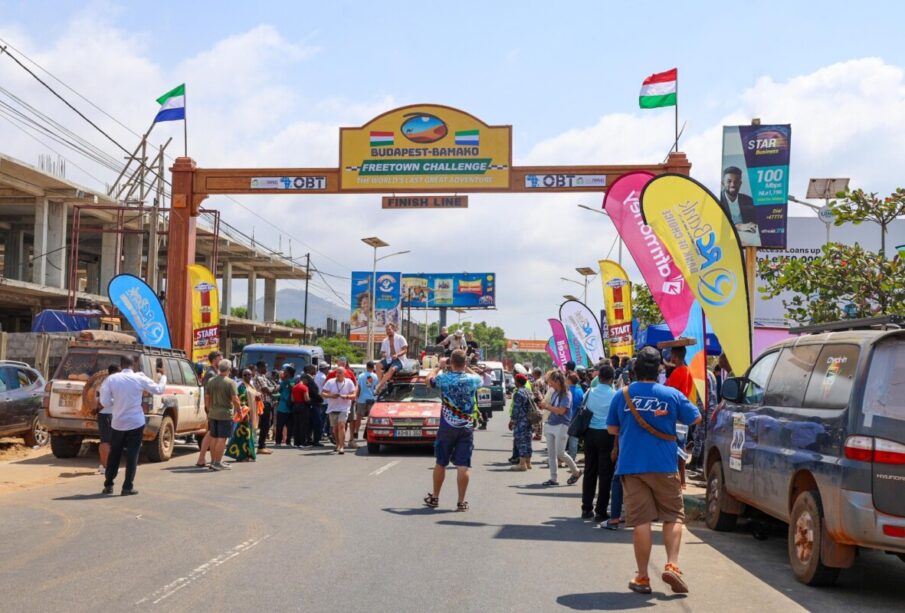
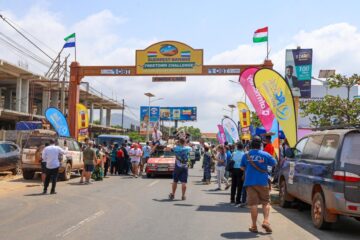
The first batch of the Budapest-Bamako-Freetown Rally participants, comprising 352 vehicles and 749 participants from Hungary, crossed the finish line in Freetown, Sierra Leone, on Monday, 10 February 2026.
Known as the world’s largest amateur adventure and charity rally, the first part of the Budapest-Bamako-Freetown rally ended at the Gigibonta Car Park along Lumley–Aberdeen Beach Road. The 2026 edition of the rally is happening in two batches; the first batch, which occurred last Monday, and the second batch, which will happen on March 5th, 2026.
The second batch will enter Freetown in March, consisting of 203 vehicles and 492 participants, overnighting at Bureh Beach and concluding with the Finish Line Ceremony on 6th March 2026.
The rally is being led by the Ministry of Tourism and Cultural Affairs in collaboration with the National Tourist Board, the Monuments and Relics Commission, VSLTRAVEL and key public and private-sector partners.
Drivers, motorcyclists and support crews arrived after weeks of travel across Europe and North Africa, culminating in celebrations at Lumley-Aberdeen Beach, where crowds gathered to welcome the convoy.
Freetown Replaces Bamako as Finish Line
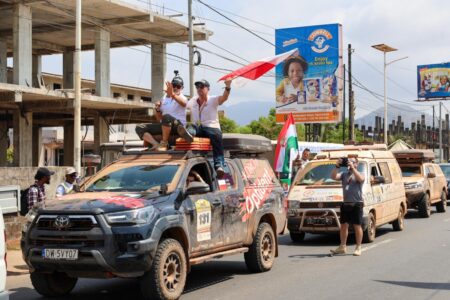
Image: Budapest-Bamako-Freetown Rally participant arriving in Freetown
The rally’s traditional endpoint was previously Bamako, Mali, but organisers have rerouted to Freetown in recent years due to “political instability and security challenges in Mali.”
“In early 2025, we reached an agreement with the Government of Sierra Leone to host the 2026 finish line in Freetown again,” rally founder Andrew G. Szabo said. “After long and difficult driving, participants deserve to enjoy the warmth, hospitality and beaches of Sierra Leone.”
Sierra Leone has now hosted multiple editions of the rally since 2020, prompting organisers to commit to Freetown as the official finish destination through 2034.
A Rally Built on Accessibility, Endurance and Adventure
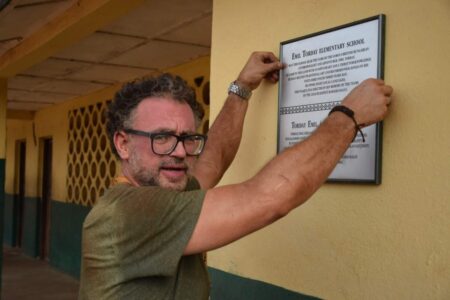
Image: Andrew G. Szabo, founder of the Budapest-Bamako-Freetown Rally
Founded in 2005, the Budapest–Bamako Rally, as it was previously called, was conceived as a low-budget alternative to elite desert races such as the Dakar Rally, allowing participants to compete in affordable and unconventional vehicles.
“People can enter in cheap cars, old cars, and no one has to drop out just because they lack experience,” Szabo said. “That philosophy hasn’t changed in 20 years.”
The rally is not a speed competition but an endurance and navigation challenge, with points awarded for completing daily tasks rather than racing times.
Route Across Two Continents and 10 Countries
This year’s rally began in Budapest, Hungary, before crossing southern Europe and ferrying to North Africa.
From Morocco, teams traversed the Atlas Mountains and the Sahara Desert before entering Mauritania, Senegal and Guinea, eventually ending the rally in Sierra Leone’s beautiful coastal beach.
Participants completed the final stretch from Bureh Beach to central Freetown in a ceremonial convoy, ending at the Gigibonta Car Park.
Strong Economic Impact on Tourism and Local Businesses
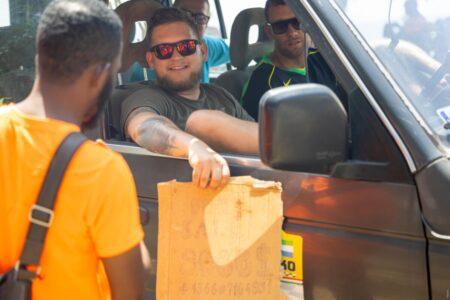
Image: A Hungarian participant holding a ‘for sale’ card for his vehicle
The rally generated significant economic activity, particularly in the hospitality, transport and retail sectors of Sierra Leone.
“We are thrilled to host the ‘Budapest-Bamako Freetown Challenge’ in our nation’s capital”, said Dr Memunatu B. Pratt, Minister of Tourism in Sierra Leone.
This is the second time the rally has finished in Freetown.
“The reception last time was fantastic, the energy of Freetown is powerful and the stunning beaches provide memorable leisure time after an exhausting two weeks on the road”, said Szabo about how Sierra Leone was chosen.
The rally also brings lots of revenue for hotels in Freetown along the coastal beach, with near-full occupancy during the rally period.
Local car dealers also benefit from the rally, as some participants opted to sell their vehicles locally.
Artisans and craft vendors got increased demand from visiting rally teams selling cultural and traditional handcrafted earrings, necklaces, hand-woven traditional clothes and hats.
Drivers Share Stories of Survival and Discovery
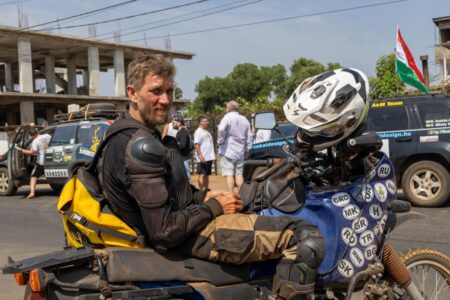
Image: Balázs Varga, one of the participants of the rally (Image by Swit Salone)
Among the finishers was Balázs Varga, a Slovak-Romanian motorcyclist who spent 24 days riding across Europe and Africa.
“There are moments when it’s good and moments when it’s bad,” he said. “My hardest point was in Spain, when heavy winds pushed me off a bridge, and I almost died. But arriving in Sierra Leone, after mountains and deserts, everything feels calm and refreshing. Now I understand why this is the finish line.”
He described Sierra Leone as “super friendly,” adding: “The beaches are peaceful, the people are welcoming. It’s perfect.”
What Do the Participants Feel About Sierra Leone
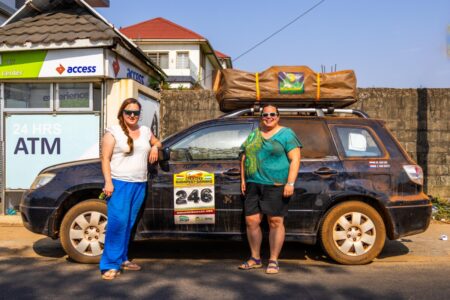
Image: Maud van Erp and Jannette van Soest in front of their car (Image by Swit Salone)
Two Dutch participants, Maud van Erp and Jannette van Soest, also completed the journey after departing Europe on 19 January and arriving in Freetown on 9 February, crossing 11 countries without a single mechanical failure.
“Our vehicle is not the strongest or best, but we were lucky to drive through the toughest terrains without breaking down,” Maud said.
Maud, who learned to drive in Sierra Leone, credited her experience there for their smooth journey. “I got my driving licence in Sierra Leone, so I drive calmly and safely,” she said.
Having visited the country four times, she described Sierra Leone as “peaceful and joyful.”
“What’s not to love; the people, the culture, the vibe?” she said. “In Europe, we lost things to theft, but here everyone was shocked by how safe it feels. People are kind and always want to help.”
Jannette said she joined the rally after hearing about it while travelling in Mauritania. “A friend told me it was dangerous, but Maud said yes immediately,” she said. “Now I understand why.”
Rally Delivers Humanitarian Aid in Sierra Leone
Image: Participants arriving at the finish line at Gigibonta, Lumley-Aberdeen Beach (Image by Swit Salone)
Beyond tourism, the Budapest–Bamako-Freetown Rally is widely recognised as Africa’s largest charity rally. \
Each year, the rally delivers between €700,000 and €900,000 in humanitarian assistance across West Africa.
Past projects have included building schools in Mali and Guinea-Bissau, drilling freshwater wells in Mauritania and The Gambia, donating medical equipment to clinics, installing solar panels in rural villages, and providing bicycles and vehicles to underserved communities.
Each year, the team that completes the most impactful humanitarian project receives the Mother Teresa Charity Award.





-
Sierra Leone Hosts 2026 Budapest–Bamako–Freetown Rally Finale
The first batch of the Budapest-Bamako-Freetown Rally participants, comprising 352 vehicles and ... -
-
-