He Built a Generator Out of Tablespoons. Now He’s Turning Sierra Leone’s Trash into Jobs.
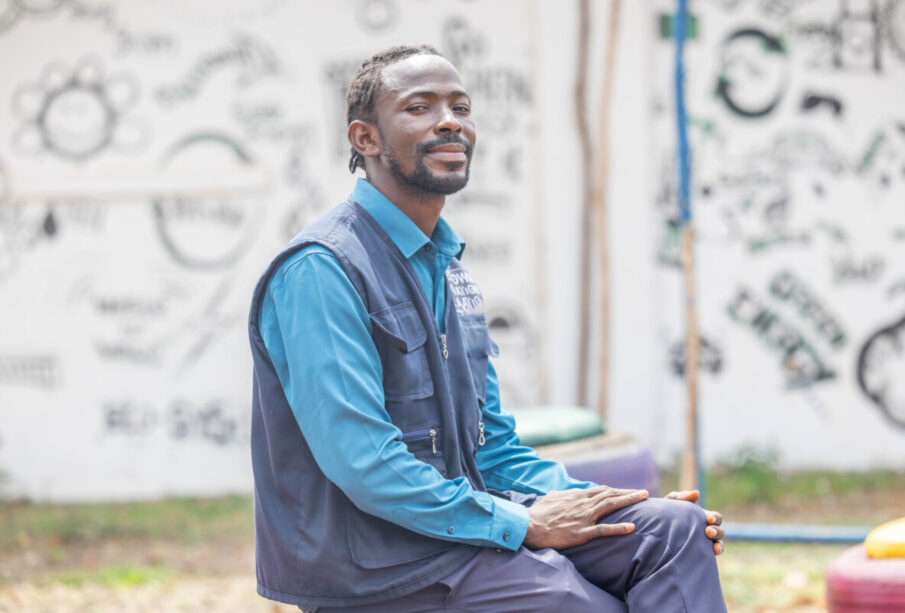

Mohamed A. Kamara, 33, grew up in a home where electricity was a luxury.
His father worked as a security guard, earning about $10 a month. There were nights his family struggled to afford food, let alone electricity.
Today, Kamara is the co-founder and Managing Director of Freetown Innovation Lab a waste recycling hub and green skills training centre helping young Sierra Leoneans turn waste into useful products while they build the skills they need for employment.
His journey into innovation started with a problem of his own.
Turning Waste Into Light
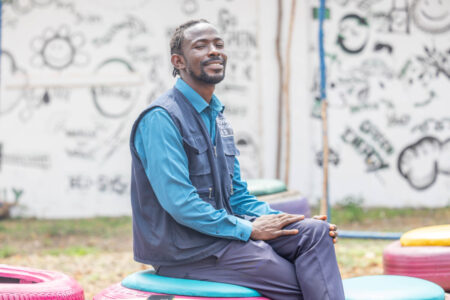
Mohamed A Kamara co-founder and Managing Director of Freetown Innovation Lab
Growing up in northern Sierra Leone, Kamara relied on kerosene lamps to study at night. When kerosene became hard to afford, he started collecting discarded batteries from scrapyards, connecting them to build simple lighting solutions for his home.
Those early experiments planted something in him.
He later won a scholarship to study physics after being admitted to EducAid Sierra Leone on the strength of his school performance. But resources remained scarce.
“Even though I did not have access to the internet or many resources to carry out research, I relied heavily on my imagination and creativity,” he said.
So he went back to the scrapyard, this time collecting discarded metals, tablespoons, and other forms of waste, experimenting with ways to generate electricity from it.
Those experiments resulted in a hydropower generator built from tablespoons and scrap metal.
Kamara installed it in Kasafoni in Bombali District: a community that had never had electricity before. The system powered more than 50 homes and reached over 2,000 people. Students could finally study after dark. Businesses could stay open past sunset.
“That experience gave me the motivation to think bigger,” Kamara said. “I started thinking about other problems that my creativity could help solve.”
That decision led to Freetown Innovation Lab.
Building a Hub for Young Innovators
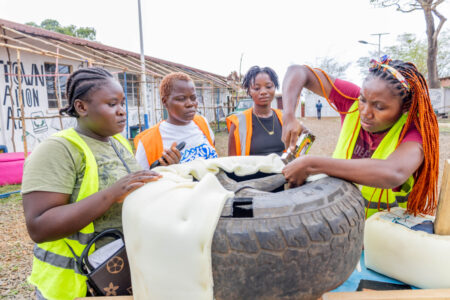
Students working on a chair made from recycled tire
Kamara founded the Lab in 2021, with a goal bigger than one generator: to create a space where young Sierra Leoneans could build their own solutions to environmental and social problems.
“We specialise in five areas of waste recycling: plastic waste, discarded tyres, oil waste, e-waste and fashion waste,” he explained.
Through the Lab’s TrashCash app, people can flag when they have waste to sell. The lab buys it, turning junk into extra income, and reshaping how people see materials they would otherwise throw away.
That waste becomes furniture, construction materials (including bricks and beams), dustbins, or art pieces.
“All of these innovations come from a blend of waste and creativity to develop products that can improve the lives of ordinary Sierra Leoneans,” Kamara said.
Since it began, the Lab has recycled more than 60,000 kilograms of waste and built a base of more than 2,800 customers.
Giving Young People Skills to Earn
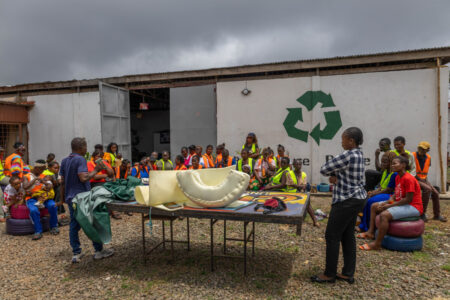
Participants gathered outside the Freetown Innovation Lab workplace.
For Kamara, recycling is only half the mission.
The Lab has trained over 500 young people in practical recycling skills. About 70 percent are women, many from slum and coastal communities.
“We want people to see waste from a different perspective,” Kamara said. “We want them to see waste as having value, not simply as something to throw away.”
The Lab also backs other young innovators, among them James Samba, founder of Sierra Electric Limited, which converts kekes into electric vehicles; Eco Ignite, which turns food waste into clean cooking fuel; and an innovator known as Mr Tucker, who is building Sierra Leone’s first helicopter from waste materials.
A New Skill for Juliet from Freetown Innovation Lab
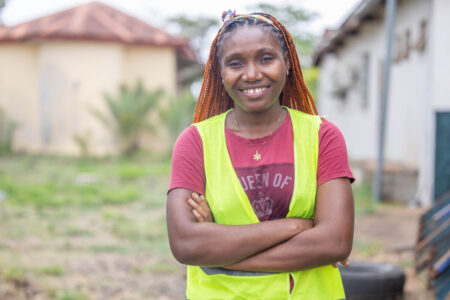
Juliet John, a beneficiary and trainee at the Innovation Lab
Juliet John, from the Grey-bush community, is one of the Lab’s trainees.
Before joining, she worked as a cosmetologist in hairdressing, pedicures, and makeup. She also holds a diploma in Mass Communication
At the Lab, she picked up something new.
“I have learned how to recycle old tires and transform them into different shapes and useful items that can also be used to beautify spaces,” she said.
Turning old tires into chairs, specifically, has given her something extra to fall back on.
“I can now make these items and generate income from them, which will help me improve my life and take care of myself,” she said.
For John, it’s about more than income.
“We should not allow our environment to become dirty. Instead, we can recycle waste and turn it into something useful that we can use for a long time,” she said.
Taking Innovation to the Next Generation
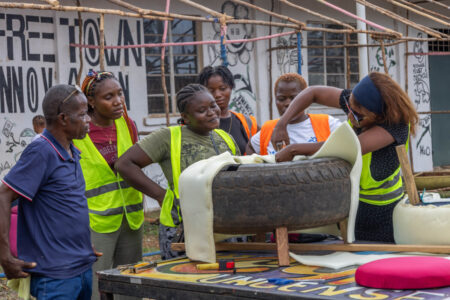
Team members and mentors working on practical recycling designs
The Lab’s work stretches beyond recycling and job training.
Its second annual STEM Fest which took place on the 2nd of May, 2026, brought together more than 1,000 young people, ages 5 to 19, for hands-on sessions in coding, robotics, flight and navigation, recycling, and artificial intelligence.
For Kamara, it all traces back to his own childhood growing up without the resources he now works to give others.
“I wanted to be an innovator who was not fortunate enough to have all the resources and opportunities growing up, but who could create an environment where other young people could thrive and survive,” he said.
Waste, in his eyes, is more than just something to clear off the streets.
“We see waste as an opportunity. We see waste as treasure,” he says.




-
Sierra Leone’s Mohamed Samu Wins 2026 Abdoulaye Touré Agricultural Innovation Award
Sierra Leonean applied entomologist Mohamed Saviour Samu, founder of EntoTech, has won ... -
-
-