
Fela Kuti Enters Rock & Roll Hall of Fame as His Musical Revolution Lives On
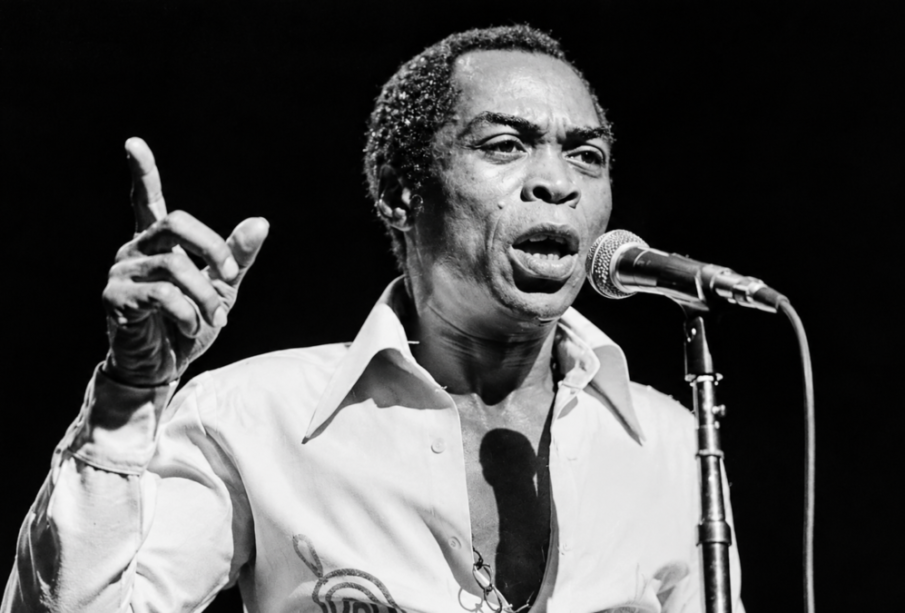

Fela has been inducted into the Rock & Roll Hall of Fame, recognised as a pioneer of Afrobeat, a fearless political activist and a cultural icon whose influence extends far beyond Africa.
Nearly three decades after his death, Nigerian music legend Fela Anikulapo Kuti is receiving global recognition for a legacy that continues to shape music and inspire generations.
His children accepted the honour on his behalf, celebrating the recognition of a musician whose work transformed African music and challenged political authority.
This award is normally given 25 years after the song has been released.

Fela Kuti’s Children in attendance of receiving his honour (L-R Seun Kuti, Yeni Kuti,Femi Kuti, Shelawa Kuti and grandson Mádé Kuti)
The Birth of Afrobeat: A Sound That Changed African Music
Fela’s greatest musical contribution was the creation and popularisation of Afrobeat, a distinctive sound blending traditional Yoruba rhythms, highlife, jazz, funk and soul.
His music broke away from conventional structures, embracing extended instrumental performances, powerful percussion and politically charged lyrics.
Through his band, Africa 70, and later Egypt 80, Fela developed a sound that became one of Africa’s most recognisable musical exports.
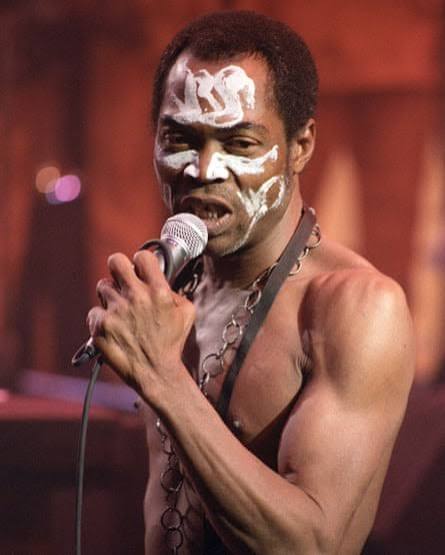
Fela Kuti in his normal stage appearance
Songs such as Zombie, Water No Get Enemy and Sorrow, Tears and Blood remain important works in African music history.
His innovation helped establish a musical identity that continues to influence contemporary African sounds.
Music as a Weapon: The Fearless Political Activist
Beyond entertainment, Fela viewed music as a powerful instrument for confronting injustice.
He openly criticised corruption, military dictatorship, police brutality and political oppression in Nigeria, often putting himself at odds with successive governments.
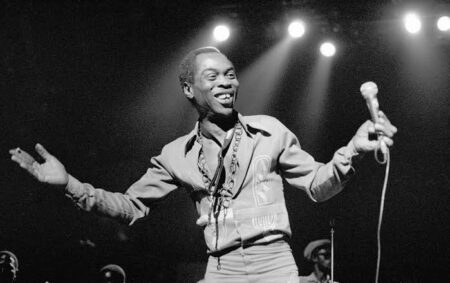
Fela Kuti in stage performing
His 1976 album Zombie directly challenged the Nigerian military, comparing soldiers to unquestioning machines that followed orders without independent thought.
His activism came at a considerable personal cost. He experienced arrests, harassment and violence, but continued using his music to speak against abuses of power.
For Fela, music was not simply about rhythm and entertainment. It was a platform for political consciousness, resistance and social change.
A Legacy Beyond Generations: Inspiring Africa’s Music Giants
Fela’s influence did not end with his death in 1997. Nearly three decades later, his musical philosophy continues to inspire artists across Africa and internationally.
His children, particularly Femi and Seun Kuti, have carried elements of his musical and activist traditions into new generations.
His influence lives on in African artists inspired by his sound, bold expression and activism.
Beyond music, Fela became a cultural symbol whose life represented artistic freedom, African identity and resistance against oppression.
His induction into the Rock & Roll Hall of Fame further recognises the global significance of his contribution to music.
Although he died on August 2, 1997, aged 58, Fela’s music and message remain alive.
His voice may have fallen silent, but the revolution he started continues to play.







-
Sierra Leone Returns to Miss Universe After 7 Years as Katti Fofanah Arrives in Puerto ...
After seven years away from the competition, Sierra Leone is back on ... -
-
-