
A Beginner’s Guide to Sierra Leone Music: From Palm-Wine to Krio Fusion


Sierra Leone is small, but its sound is huge.
If you’re just getting into Salone music, you don’t need to know everything, you just need to know where it started, how it survived, and where it’s going now.
This is your map.
First, Understand This: Salone Music is a Mixture
Sierra Leone sits where Africa, Britain, the Caribbean, and America met.
Freetown was founded for freed slaves. Maroons from Jamaica, liberated Africans, black loyalists from America and Canada, and Temne, Mende, Limba, Susu, Fula, and Mandingo people who were already here.
That mix is why Salone music never sounds like just one thing. You’ll hear Krio (the country’s lingua franca), English, Temne, Mende, and a lot of storytelling.
Key word to know: Krio. If you understand Krio, you understand 90% of modern Salone pop.
The Roots: The Sounds that Built Everything
These are the three traditional foundations that some modern artists in Sierra Leone still draw on today.
Palm-Wine / Maringa
Born in the port bars of Freetown in the 1920s. Kru sailors brought the acoustic guitar, played it with a two-finger picking style, and sang about daily life while people drank palm wine.
In Sierra Leone, palm-wine is called “poyo” light, melodic, danceable guitar music mixed with Trinidadian calypso.
Palm-wine music is where modern Salone pop begins, and two names define it.
Ebenezer Calendar & His Maringa Band brought palm-wine to the dancefloor. His music is warm, witty, and made for dancing, and songs like “ Double Decker Bus” , “Jollof Rice” show how he turned everyday Freetown life into irresistible highlife. If you want to hear what Freetown sounded like when people gathered to dance, this is where to start.
S.E. Rogie, often called the “pope of palm-wine” guitar, took that sound even further. His finger-picking guitar style and gentle storytelling made him a legend across West Africa and beyond. His songs “ My Lovely Elizabeth”, “Go Easy With Me” are still the perfect introduction to his work..
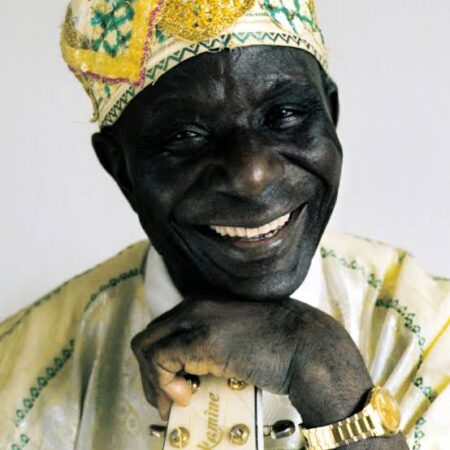
S.E Rogie, holding his guitar
Gumbe / Goombay & Milo Jazz
Gumbe came with the Jamaican Maroons who arrived in Freetown in 1800. The gumbe is a square drum with legs, played to connect with ancestors and to dance.
Later, Dr. Oloh turned it into Milo Jazz using empty Milo cans filled with stones as shakers. That rattly, joyful sound is still the heartbeat of a lot of Salone pop today.
To hear it at its best, you should seek out any live recording by Dr. Oloh and the Milo Jazz Band from the 1970s to 1990s where the energy of the band and the crowd comes through in every song.
Bubu
Bubu is from the Temne people in the north/west. Typically, it’s played by a band of about 10 people with bamboo flutes of different lengths, carburettor pipes, drums, cowbells, and shakers. As a result, it sounds like a wild, upbeat brass band.
It was originally for calling ancestral spirits and later for Ramadan processions. Then Janka Nabay took it from the villages to Freetown, modernised it with synths, and took it to New York.
To hear how powerful that transformation was, you should start with “ En Jay Say” by Janka Nabay & The Bubu Gang, which captures the wild,upbeat energy of bubu flutes, drums and cowbells in full flow.
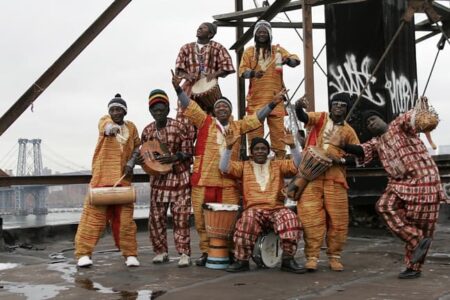
Sierra Leone’s Refugee All Stars in New York City. Photo credit:GreenGlobal Travel
The Golden Age: 1960s – 1980s
Artists like African Connexion, Super Combo, and Abdul Tee-Jay made Afropop that was made for dancing but still very Sierra Leonean.
If you like Fela Kuti or Manu Dibango, you’ll love this era.
The War Years & The Comeback: 1990s – 2000s
The civil war (1991-2002) scattered musicians, but it didn’t kill the music.
Sierra Leone’s Refugee All Stars formed in a refugee camp in Guinea. Their album “Living Like a Refugee” (2006) mixed palm-wine, gumbe, reggae, and highlife and put Salone music back on the world stage.
Back home, a new generation was building Salone hip-hop and Afropop from scratch.
Several artists defined this era, and their work still shapes the sound of Sierra Leone today.
-
Emmerson (Emmerson Amidu Bockarie)

The conscience of Salone pop. He sings in Krio and English about corruption and everyday struggle. His 2004 debut “Borbor Bele” became an anthem. To understand his impact, listeners should start with “ Borbor Bele”, Munku, Tutu Party, and “ Elizabeth.”
2. Kao Denero (Amara Dennis Turay)

Known as the King of Freetown hip-hop and the founder of Black Leo, he blends hard rap with African rhythms and social commentary. In addition, he was crowned Best African Rapper at the Africa Golden Awards in 2025, and today he serves as Special Envoy for Entertainment. His essential songs include, Heroes, Hakuna Matata.
Other pillars of this era: Jimmy B, Steady Bongo, Star Zee, LAJ, who each helped carry Salone music through the post-war period and into the mainstream.
3. M2 (Mariatu Bangura)

Dubbed as the Queen of Sierra Leone music, She built a career across 13 albums. She won Best Female Artist of the Year and became the blueprint for longevity for Sierra Leone women in music. Want to get a feel of M2’s voice? Listen to these songs, Sweet Africa, Me Nor Bisin Dae, Prove am
4. Vida ( Davida Green)

Davida Green AKA Vida
A popular female vocalist who emerged from the comeback generation and has become one of the most talked-about female voices in contemporary Salone music. She is known for emotional, storytelling songs that blend Afropop with personal experience. Some of her most viral songs are, Sidom Pa Dem, Usai Life Dae.
The New School: 2010s – Today
This is where it gets exciting.
The New School grew up on Afrobeats, dancehall, hip-hop, and R&B, but they brought gumbe and bubu back into the beat.
Drizilik
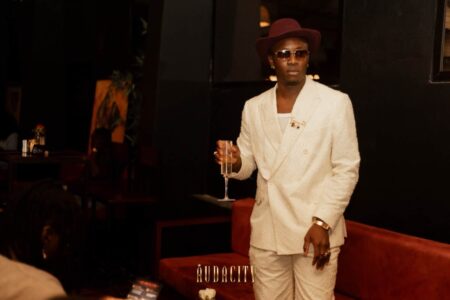
The leader of the new wave, notably, he calls his sound “Krio Fusion,” which is a blend of traditional bubu and goombay, Afrobeats, hip-hop, and R&B, sung in Krio.
His collaboration with The Therapist on Lemonade went viral for its swagger and Krio hook, fans call it a Salone anthem for going global.
If you want to understand his sound, explore Shukubly,” “ Sabi Road,” Ashobi” which shows how he moves effortlessly between street energy and melody.
Other New School stars to follow:
- Star Zee – is the dancehall queen of new school, known for her fierce stage energy and for the viral hit “ Corner Corner Love”
- Incredible JJ, ApreeL, Legacy Boi – the three names fans are constantly debating right now for “best vibe” in Salone Afrobeats
- Kracktwist, Samza, Empress Pee, Yung Sal– are at the core of the Krio Fusion movement keeping the gumbay beat alive in modern Afrobeats. As fans often say “ anytime we use gumbay beat, di beating dae extra sweet.”
- Bakitenno– is keeping the gumbay beat alive in modern Afrobeats and rap, bringing the traditional sound with today’s production.
If you’re new to Salone music, don’t try to learn it all at once. Instead, start here, one song at a time, in order. Ultimately, this playlist takes you from palm-wine to the new school, so you can hear how the sound has grown.
- S.E. Rogie – My Lovely Elizabeth
- Ebenezer Calendar – Double Decker Bus
- Dr. Oloh – Millo Jazz
- Janka Nabay – En Jay Say
- Sierra Leone’s Refugee All Stars – Living Like a Refugee
- Emmerson –Borbor Belle
- Kao Denero – Hakuna matata
- Drizilik ft. The Therapist – Lemonade
- Star Zee – Corna Corner Love
- ApreeL x Isat – Fine Lek
- Boii- Credit Alert
Listen in that order and you’ll hear 100 years of history in 40 minutes.
How to Keep Listening Like a Local
- Follow the language: If it’s in Krio, it’s probably telling you a real story. Look up the translation.
- Follow the drum: If you hear that rattly Milo-can shaker or the bubu flutes, that’s the old sound in new clothes.
- Follow the diaspora: London, Washington DC, and Toronto have huge Salone scenes. Emmerson just performed at Kaya Fest in Toronto in 2026 alongside the Marley family.
Bottom line: Sierra Leone music didn’t just survive war, Ebola, and exile. It turned all of it into rhythm.
Start with palm-wine, stay for Krio Fusion.





-
A Beginner’s Guide to Sierra Leone Music: From Palm-Wine to Krio Fusion
Sierra Leone is small, but its sound is huge. If you’re ... -
-
-


