Beyond Enrollment: Why So Many Girls Are Not Completing Secondary School in Sierra Leone
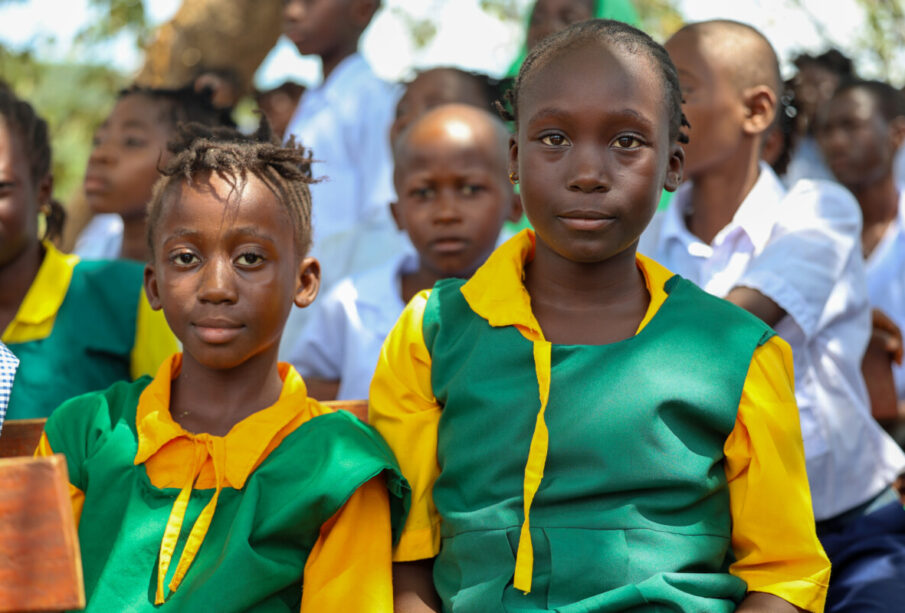
Getting girls into school is no longer the only challenge in Sierra Leone. Keeping them there is.
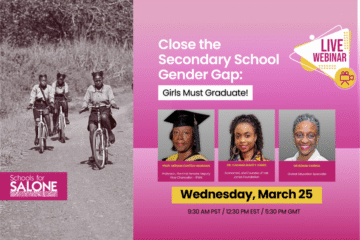
At the recent “Close the Secondary School Gap: Girls Must Graduate!” webinar hosted by Seattle-based NGO, Schools for Salone, education experts and practitioners came together to unpack a troubling reality: while enrolment of girls in schools have improved, completion rates remain critically low.
The conversation, led by Vickie Remoe, featured insights from Professor Miriam Conteh-Morgan, Dr. Yakama Jones, and Dr. Bidemi Caroll.
And the numbers are stark: According to a report by UNESCO, only 12% of girls complete secondary school, compared to 20% of boys in Sierra Leone.
So what is standing in the way?
When Being a Girl Interrupts Education
One of the most critical, and sometimes overlooked, factors discussed was how gender-specific challenges directly disrupt girls’ ability to stay in school.
As highlighted in the webinar, girls can miss up to 20% of their school days because they lack menstrual hygiene resources.
Missing school regularly means falling behind in lessons, struggling to keep up with class assignments, and gradually disengaging from school. And overtime, this significantly increases the likelihood of dropping out.
The Pressure to Grow Up Too Soon
Beyond physical barriers, many girls face social and economic pressures that pull them out of school early.
Prof. Miriam Conteh-Morgan highlighted that there are expectations of these girls to support their families and enter into early marriages. According to research done by UNICEF (2020), Sierra Leone is home to about 800,000 child brides and out of this number, about 500,000 are married before the age of 15.
These realities underscore deeply how social pressures intersect with education outcomes, often cutting short girls’ academic journeys long before they have the chance to complete their secondary school education.
Aside from this issue, it is the cultural norm to prioritise boys’ education over girls.
These pressures create a difficult reality where education becomes secondary to survival or social expectations for these girls. And once a girl leaves school, returning is often not an option.
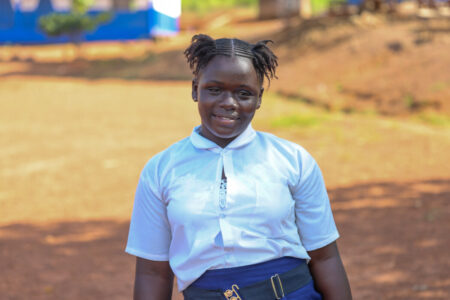
A young girl from an SfS partner school in Koromasilaia, Sierra Leone
When the System is Not Built to Support Girls
Even when girls stay in school, the system itself does not always set them up for success.
A major issue that was highlighted by Dr. Bidemi Carrol was that about 65% of educators in most of the schools in Sierra Leone do not have the fundamental training needed to effectively teach children how to read.
This has serious implications.
If fundamental skills like literacy are weak, then girls will struggle academically, their confidence in their abilities will drop, and their academic performance will decline.
“And when performance declines, so does the motivation to stay in school,” Dr. Caroll highlighted.
Also, language plays a role in shaping outcomes. As discussed during the session, language is a barrier and it often means exclusion.
For many girls, especially those in rural communities, English is not spoken at home. This makes learning more difficult and classroom participation more intimidating. Over time, this can lead to reduced engagement, poor academic performance, and increase the likelihood of dropping out.
A Surprising Insight: Girls Are Performing But Are Still Not Staying
Interestingly, the latest academic trends in Sierra Leone show that girls are not underperforming academically, at least not at the primary level.
In fact, girls are often outperforming boys in national exams like the National Primary School Examination (NPSE). As Dr. Jones explained, this may come down to learning behaviour.
“Boys are often more in a hurry to complete their responses so they don’t read all the options. As soon as they get the questions, they think they know the answers. But girls often do take the time to go through the list and then make a decision. It’s just these small things that I have noticed.”
So this issue is not their capability. It is their continuity.
Girls are starting strong but something is happening between primary school and JSS that is causing them to fall off.
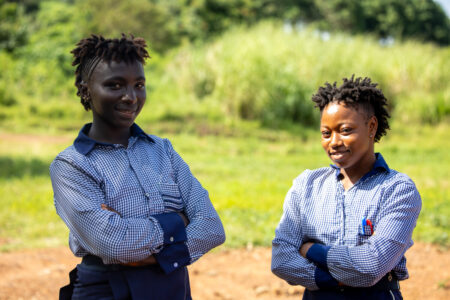
Some girls from an SfS partner school in Koromasilaia, Sierra Leone
The Way Forward: What Schools for Salone is Doing and How You Can Help
While the challenges affecting girls’ secondary school completion is deeply rooted, the webinar also highlighted some of the solutions that are already in motion. At the center of these efforts is Schools for Salone, working with local partners to directly address the barriers that push girls out of school.
Through targeted, practical interventions, the organization is helping to keep girls in classrooms and on track to complete their education.
These include providing free reusable menstrual hygiene pads, which have shown to directly reduce absenteeism linked to period poverty. Beyond menstrual health support, Schools for Salone also delivers regular workshops on sexual and reproductive health with their partners UMAN TOK, equipping girls with knowledge that helps them navigate adolescence with confidence and safety. Through their partnership with The Learning Foundation, they are able to train teachers in Sierra Leone so they can in turn impart the right knowledge in the minds of the children they teach. But these are just a few of what Schools for Salone is doing to keep not only girls but boys in school as well.
Although this is great work, it cannot be done alone.
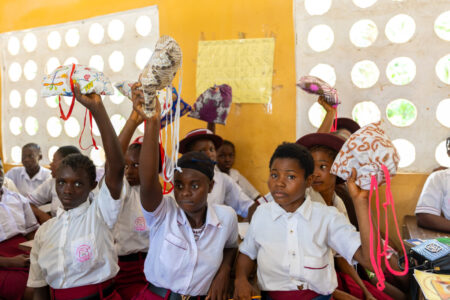
Some young girls with the reusable menstrual kits produced -by Uman Tok with support from Schools for Salone
Sustaining and expanding these programs require collective support from individuals, partners, and organizations who believe in keeping girls in school.
You can help by making a donation to help provide menstrual hygiene products and educational materials for girls in need of it. Every contribution, no matter the size, goes directly towards helping a girl stay in school and address other barriers such as period poverty that can hinder her from completing her JSS education.
Because when girls are supported to stay in school, they don’t just complete their education, they help change what is possible for the next generation.
Please donate HERE: https://schoolsforsalone.salsalabs.org/donationformpd20170328/index.html




-
Beyond Enrollment: Why So Many Girls Are Not Completing Secondary School in Sierra Leone
Getting girls into school is no longer the only challenge in Sierra ... -
-
-