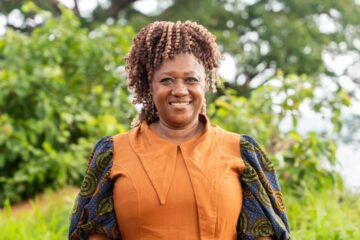
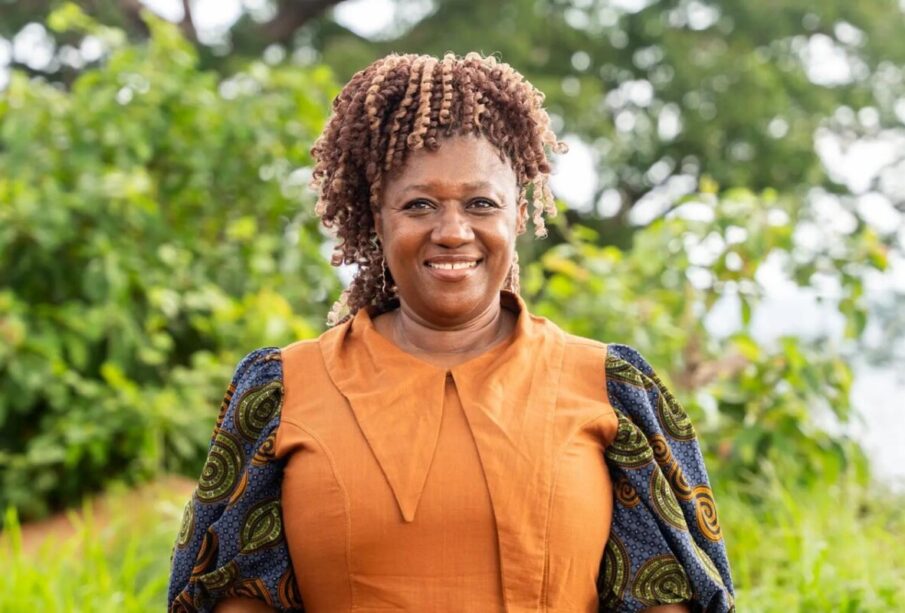
Sierra Leonean midwife, Head of Nursing and Midwifery at the Paul E. Farmer Maternal Centre of Excellence (MCOE) in Kono, Isata Dumbuya, has been named among TIME’s Women of the Year 2026, in recognition of her efforts to tackle and reduce maternal and infant mortality in Sierra Leone.
Dumbuya, who spent 25 years working for the National Health Service (NHS) in the United Kingdom, returned to Kono District in 2018, where she was born.
She left Sierra Leone during the height of the civil war, at a time when the country was grappling with one of the highest maternal mortality rates in the world.
Today, as a nurse-midwife and reproductive, maternal, neonatal, child, and adolescent health lead for PIH Sierra Leone, Dumbuya is championing maternal healthcare in the place she left 25 years ago.
Returning to a Fragile Health System and Making it Work
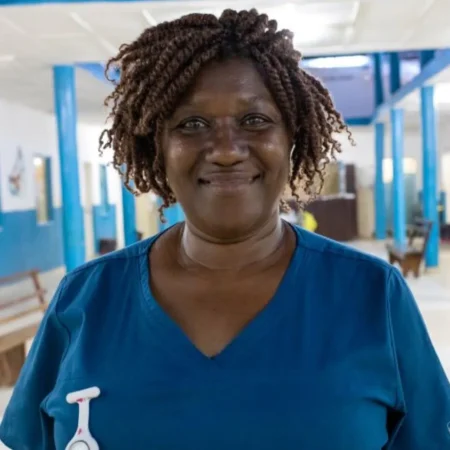
Image: Isata Dumbuya Working as a Midwife at the Paul E. Farmer Maternal Centre for Excellence in Kono
In 2018, Dumbuya joined Partners In Health Sierra Leone as Head of Nursing and Midwifery when the international healthcare nonprofit organisation announced plans to establish Sierra Leone’s first maternity and neonatal facility.
While fundraising and construction of the newly built Paul E. Farmer Maternal Centre of Excellence were ongoing, Dumbuya began work at the existing government hospital in Kono.
Dumbuya described her early months back in Sierra Leone as “heartrending,” citing the high volume of preventable maternal deaths and the limited resources available to frontline healthcare workers.
Although Sierra Leone’s maternal mortality rate has declined significantly from over 1,600 in 2000 to approximately 354-443 deaths per 100,000 live births in 2023.
But despite this reduction, Sierra Leone remains one of the countries with the highest maternal mortality rates globally, as health workers are often faced with shortages of essential medical equipment and specialist training.
“The country has been through Ebola, landslides, war and other crises and it’s changed how people think about healthcare. The trust is not there,” said Dumbuya.
“It puts people off coming to hospitals. They are fearful about the lack of services and resources. So instead, women go to traditional healers, take behind-the- counter medicines, and have unsafe deliveries,” she continued.
Dumbuya’s Role in the Fight Against Maternal Deaths in Sierra Leone
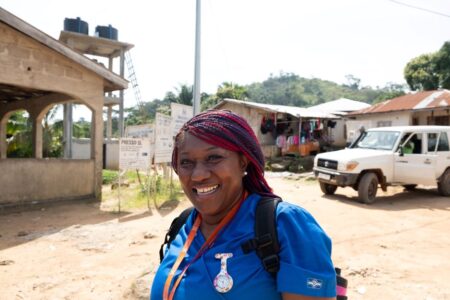
Image: Isata Dumbuya on duty for PIH Sierra Leone
Returning to Sierra Leone after working for 25 years at the NHS, Dumbuya’s mission is to eradicate maternal and infant mortality in Sierra Leone and help pregnant mothers receive the best medical services they deserve.
She played a significant role in the construction of the Paul E. Farmer Maternal Centre of Excellence, a state-of-the-art healthcare facility built by Partners in Health Sierra Leone, with support from local and international partners, to radically reduce maternal mortality.
Dumbuya has since focused on improving clinical standards and emergency preparedness within maternity wards.
Her work includes securing medical supplies, training nurses and midwives to recognise early warning signs in pregnancy, and strengthening response systems for obstetric emergencies.
Beyond the hospital walls, Dumbuya has also worked with traditional birth attendants and community leaders to rebuild trust between families and the formal health system.
“We need to be able to train a cohort of Sierra Leone national staff to that highest level,” Dumbuya said in an interview with TIME. “Because that’s what’s sustainable.”
Works at The Paul E. Farmer Maternal Centre of Excellence
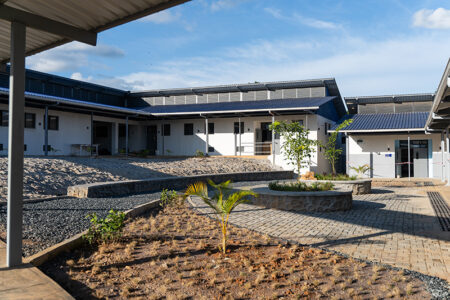
Image: The Paul E. Farmer Maternal Centre for Excellence in Kono
On February 14 2026, Partners in Health Sierra Leone opened the Paul E. Farmer Maternal Centre of Excellence in Kono District, named in honour of Dr Paul Farmer, co-founder of Partners in Health.
The 120-bed healthcare facility includes modern and highly equipped maternity wards, expanded surgical capacity, and Sierra Leone’s first neonatal intensive care unit (NICU).
With Dumbuya at the helm of affairs, MCOE serves pregnant and lactating women, infants across Kono and neighbouring districts, offering specialist maternal and newborn care previously unavailable in the region.
The centre represents a significant step in efforts to reduce preventable maternal and neonatal deaths in Sierra Leone, particularly in rural and underserved communities.
As a mother of five, Dumbuya said it brings a unique perspective to her work.
“It brings out the best in me. That motherly part of me that likes to nurture and see things grow. I’m a mother to 550 people in my place of work. People will work with you when you are like that.”
Albeit the challenges, Dumbuya said it is upon her and her colleagues to use what they have at their disposal and make it work. “You have to find a way to work with what you do have and make it work for what you want,” she said.
She has worked on several life-saving healthcare initiatives since she returned to Sierra Leone, establishing a clinical outreach team to provide reproductive health education and services across all 14 chiefdoms in Kono District.
Despite being named alongside 15 other women globally on TIME’s Women of the Year 2026, a recognition for the books, Dumbuya said her focus remains on improving outcomes for women and newborns in Kono and the country at large.






-
TIME Names Sierra Leonean Midwife Among 2026 Women of the Year
Sierra Leonean midwife, Head of Nursing and Midwifery at the Paul E. ... -
-
-