Sierra Leone Launches SIM-Based Child Online Protection Service
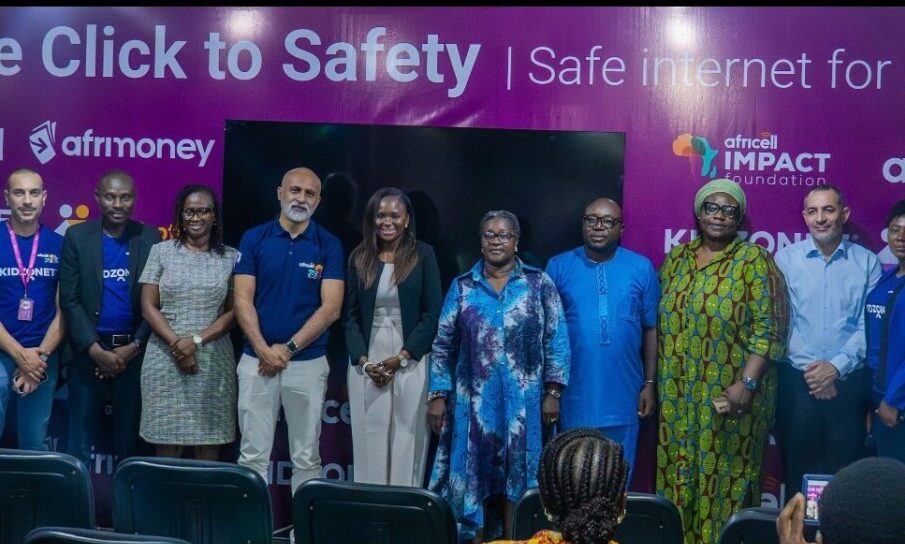
Sierra Leone has launched Kidzonet, the first-ever SIM-based child online protection service in Africa, which allows parents and guardians to manage, track, and protect their child’s social media and online content consumption.
The service was launched by Africell Sierra Leone at the Africell E-Learning Hub in Freetown, with Salima Monorma Bah, Minister of Communication, Technology and Innovation, and other leaders in telecommunications in attendance.
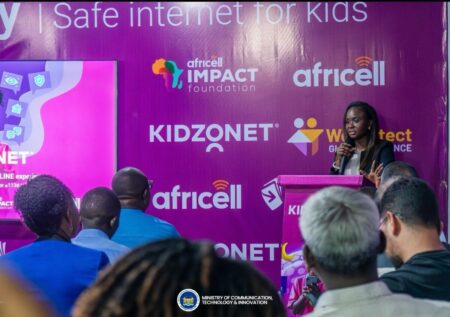
Image: Minister of Communication, Technology and Innovation, Salima Bah
What is Kidzonet
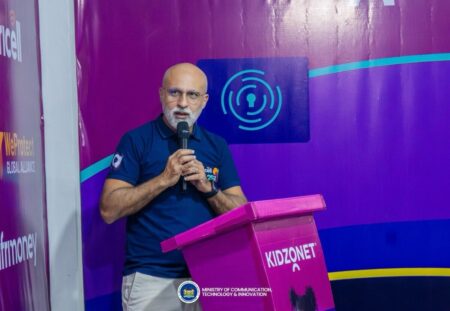
Image: Chief Executive Officer (CEO) of Africell Sierra Leone is Shadi Gerjawi at the launch
Kidzonet, launched by Africell Sierra Leone, is Africa’s first SIM-based online protection service designed to help parents and guardians manage children’s access to social media platforms and online content.
The service operates directly at SIM level, allowing parents to activate and manage content controls.
Once activated, Kidzonet filters and blocks content considered inappropriate for children, while leaving standard voice calls and SMS services unaffected.
How to Use Kidzonet
Unlike application-based parental control tools, Kidzonet does not require smartphones or internet-enabled apps and does not function over Wi-Fi.
It is an USSD service that works by dialling *499# using an Africell SIM card, making the service dependent on the mobile network.
Parents and guardians will be charged NLe 9 ($0.39), which will keep the service active for 30 days per subscription.
The pricing structure is intended to keep the service affordable and transparent for families.
Why is this Important
With growing concerns across Africa and the world about children’s exposure to harmful online content, cyberbullying and unsafe digital interactions, this helps parents and guardians keep track of their kids’ online activities, thus keeping them safe.
The service also positions Sierra Leone at the forefront of network-level child online protection on the continent, using telecommunications infrastructure rather than device-based software to address online safety challenges.





-
U.S Opens Fulbright Scholarship For Sierra Leonean Students
The United States Embassy in Freetown has on Monday, 23 February, 2026, ... -
-
-