
From Teenage Mother to Carpenter: Jariatu Sannoh Is Building a Future for Girls in Tombo
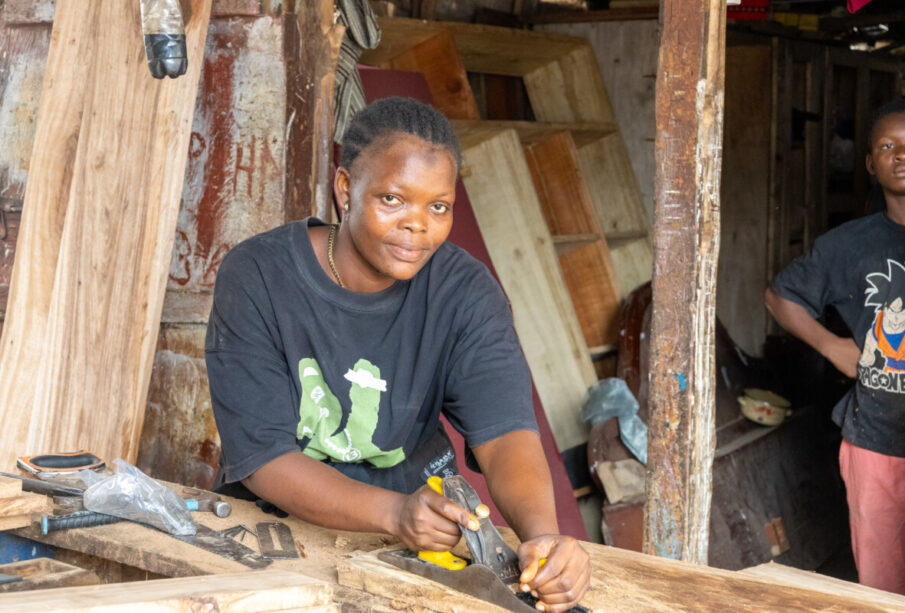
When Jariatu Sannoh became pregnant before sitting her West African Secondary School Examination WASSCE, she thought her education had come to an end.
At 27, the Tombo-raised carpenter is now using the skill she learned after dropping out of school to support her child, help her siblings and dream of training other young girls.
Born in Kenema and raised in Tombo, Western Rural District, Sannoh attended Rural Education Committee Primary School in Tombo before continuing to Tombo Secondary School.
Her journey changed when she was preparing to sit the West African Senior School Certificate Examination.
Sannoh explained that after being unable to sit the WASSCE due to her parents’ financial difficulties, she became pregnant while waiting for an opportunity to continue her education.
Her story is far from unusual. According to the 2019 Demographic and Health Survey, 22.1% of Sierra Leonean girls aged between 15 to 19 had been pregnant, and those from the poorest households were 2.5 times more likely as the richest to become pregnant because they take part in sexual activities to get money to care for themselves.
With her aging parents out of work following the birth of her child, staying home was not an option. She chose to pursue vocational training, selecting carpentry as it offered one of the rare local opportunities available to her.
For a young woman in a community where carpentry was widely seen as a man’s trade, the decision was not easy.
Choosing a Trade Meant for Men
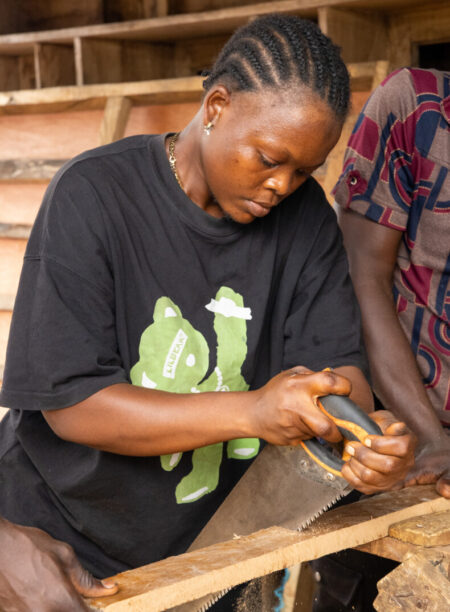
Jariatu Sannoh is sawing a board
Carpentry remains an overwhelmingly male-dominated field of work around the world. In the United States, where the data is most detailed, women make up just 3.1 percent of carpenters. No comparable figure exists for Sierra Leone, which makes women like Sannoh harder to count and easier to overlook.
Her decision to become a female carpenter was questioned by many people. But instead of walking away, she chose to challenge the idea that carpentry was only for men.
“I wanted to break that chain, so I decided to enroll and became interested in carpentry,” she said.
Today, she works alongside male apprentices under her boss, Salieu Bangura.
She lifts heavy boards, works with tools and takes on the same practical tasks as her male colleagues.
“I do the things these men do,” she said.
For Sannoh, the workshop has become more than a place where she earns a living. It has become a place where she has challenged a perception about what women can do.
Her boss says her determination is one of the reasons she has remained in the trade.
“Having a female as an apprentice actually makes me feel good,” Bangura said. “Jariatu is passionate about learning the skill.”
Bangura said retaining young people in skills training can be difficult, particularly when they face economic and social pressures.
But Sannoh stayed.
Carpentry Is Paying the Bills
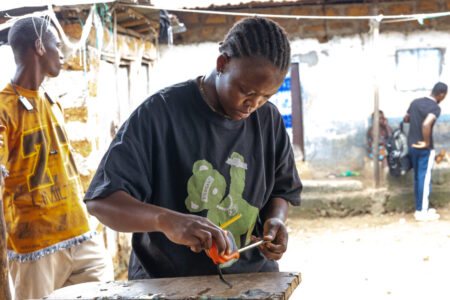
Jariatu Sannoh measuring an item
The income she earns from making furniture now helps her take care of her child.
It also helps her support her younger siblings’ education. Her decision to support her siblings reflects a different side of her story.
Although she was unable to continue her own education after becoming pregnant, she wants her siblings to have the opportunity she lost.
“I want them to be educated,” she said.
But earning a living from carpentry is not always easy. One of her biggest challenges is finding customers for the furniture she produces.
According to Sannoh, some of the beds and chairs she makes can remain unsold for two or three months.
That creates another problem because some of the materials she uses, particularly leather, can deteriorate while the furniture remains unsold.
“The main challenge is selling the furniture that I make,” she said. “Sometimes the beds and chairs I make take two or three months before they buy them.”
She hopes greater visibility for her work could help her reach customers beyond Tombo and eventually open opportunities to sell outside Sierra Leone.
A Workshop for Teenage Mothers
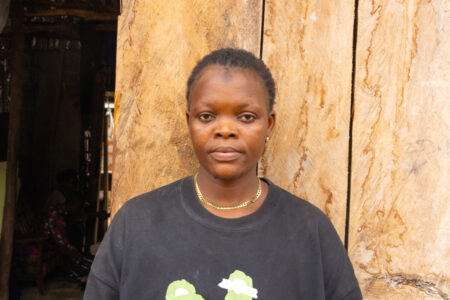
Jariatu Sannoh stands at the entrance of her workshop
Sannoh’s ambitions go beyond her own livelihood.
In the coming years, she wants to establish her own workshop where young girls and teenage mothers can learn carpentry and furniture making.
Her goal is to teach them how to make products such as tufted beds and chairs that they can sell and use to support themselves.
She believes economic independence can help young women make better choices and reduce their vulnerability to exploitation.
“I want to set up a workshop where I can train young girls and teenage mothers in my community to offset the economic burden that always takes them to men who take advantage of them,” she said.
Her idea is rooted in what she has seen around her.
Tombo is a major fishing community that attracts people from different parts of Sierra Leone. Sannoh believes the movement of people through the community, combined with poverty and limited economic opportunities for young girls, leaves some teenagers vulnerable to exploitation and early pregnancy.
She wants to confront the problem by giving girls another option.
Instead of depending on men for survival, she wants them to have a skill they can turn into an income.
Her Master Wants More Girls in the Workshop
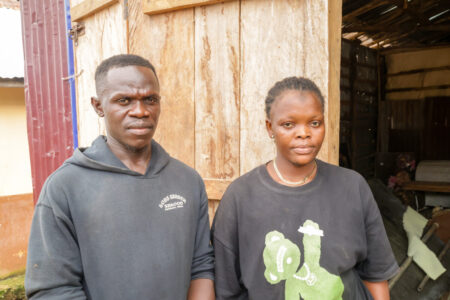
Jariatu Sannoh (right) and her boss Salieu Bangura (left)
Salieu Bangura, Sannoh’s master and supervisor at her workplace, believes carpentry should no longer be viewed as a male-only profession.
“Carpentry is no longer like before,” he said. “Now, we have so many tools that make the work easier for all genders.”
He said the old perception that carpentry is only for men or school dropouts needs to change.
Bangura wants Sannoh and other women to work in an environment where they feel safe.
“I take Jariatu as a little sister,” he said. “What I want for my daughter is what I would want for Jariatu.”
Bangura would like to train more girls from Tombo but lacks some of the tools and resources needed to accommodate more apprentices.
“I want more female apprentices from the Tombo Community, but I am constrained with tools and other requirements,” he said.
He is appealing to organisations that support youth development and women’s empowerment to consider investing in skills training for girls in the community.
“I am pleading with any NGO or organisation that may want to help. They should remember our young girls in the Tombo Community and we will be able to make an impact,” Bangura said.
Turning a Setback Into a Mission
Jariatu Sannoh’s story began with a setback.
She was a schoolgirl preparing for an examination when pregnancy forced her to leave the path she had expected to follow.
But the end of her formal education did not become the end of her ambitions.
She entered a workshop where she was initially viewed through the lens of a trade traditionally associated with men. She stayed, learned and began earning from her work.
Now she wants to turn that experience into something bigger.
Her dream is not simply to own a successful carpentry business. She wants to create a place where girls who face circumstances similar to hers can learn a skill, earn an income and build a future without depending on people who may exploit their vulnerability.
For Sannoh, the workshop is therefore more than a place where furniture is made.
It is the beginning of an idea that a girl who once had to leave school can help other girls avoid having to give up on their own futures.




-
The Issakaba Comeback: 25 Years Later, the Action Returns on November 13, 2026.
Issakaba is an anagram of Bakassi and draws inspiration from the real-life ... -
-
-