Sierra Leone Moves a Step Closer to Eliminating Cervical Cancer
Sierra Leone announced on Wednesday, March 3 2026, that it has surpassed its national target in a recent human papillomavirus (HPV) vaccination campaign, marking a step towards eliminating cervical cancer as a public health threat by 2030, according to the Ministry of Health and WHO.
The nationwide HPV campaign, which began in November 2025 at St. Joseph’s Secondary School in Freetown, vaccinated more than 1 million girls, achieving 116% coverage against an initial target of approximately 868,300.
The week-long HPV vaccination campaign was led by the Ministry of Health with technical support from the World Health Organisation and in collaboration with UNICEF, UNFPA and Gavi, the Vaccine Alliance, among other partners.
For the first time, the Ministry of Health and its partners expanded eligibility to include girls aged 11 to 18 years under a multi-age cohort strategy aimed at rapidly increasing population immunity and reducing cervical cancer cases in Sierra Leone.
Impact and National Significance

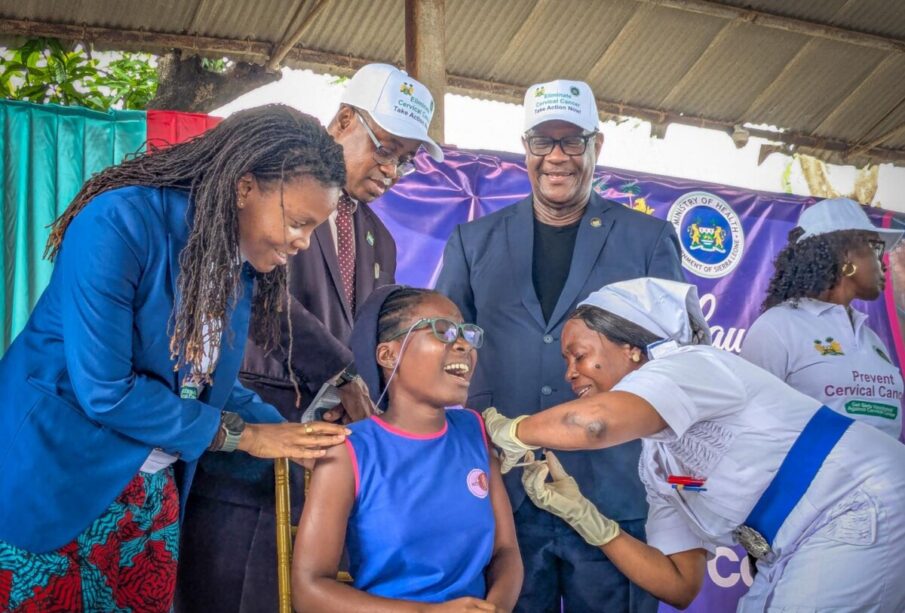
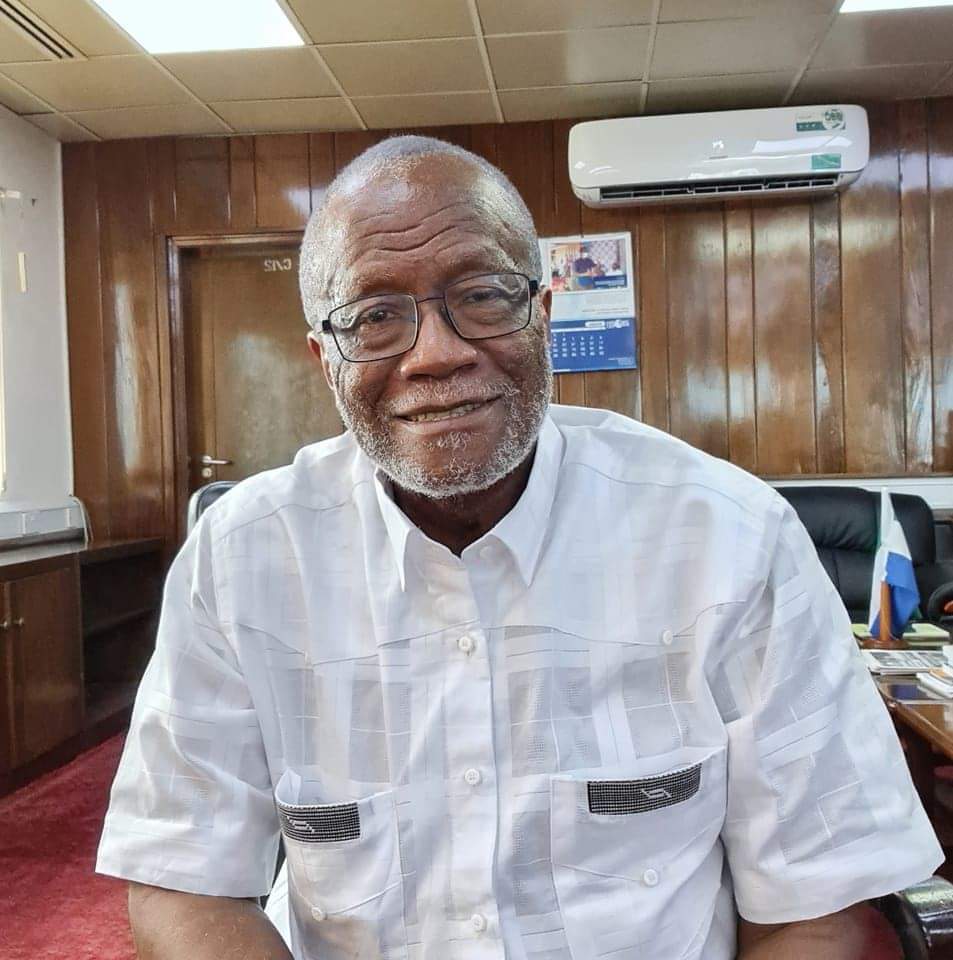
Image: Sierra Leone’s Minister of Health, Dr Austin Demby
Speaking at the launch of the HPV vaccination campaign, Health Minister Dr Austin Demby urged collective action. “We all have a responsibility to protect the women and girls in our homes and communities,” he said.
For beneficiaries like Grace Lamin, a student at St. Joseph’s Secondary School, the campaign carries personal meaning.
“Taking the HPV vaccine makes me feel protected and hopeful. I want to grow up healthy, finish my education, and become someone who helps my family and my country,” said Grace Lamin.
Cervical cancer is the second most common cancer among women aged 15 to 49.
Although it can be prevented through vaccination and early detection, cervical cancer remains the deadliest cancer affecting women in Sierra Leone, with more than 500 new cases and nearly 370 deaths recorded annually.
Health officials say the campaign’s results demonstrate both scale and equity. Of the more than one million girls vaccinated nationwide, 66% were in school while 34% were out of school, reflecting targeted efforts to reach vulnerable populations.
Among those vaccinated, 64% of schoolgirls and 53% of out-of-school girls received the HPV vaccine for the first time.
Safety and Implementation
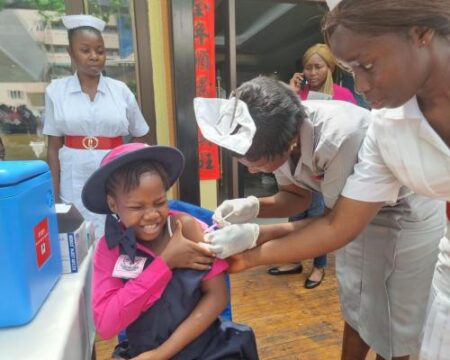
Image: An 11-year-old Sierra Leonean pupil receiving an HPV vaccine shot
The Ministry of Health and partners reported that safety monitoring remained robust throughout the campaign.
A total of 514 adverse events following immunisation were recorded, with only two classified as serious. All serious cases were promptly investigated and managed, officials said.
Vaccine utilisation reached 107%, indicating efficient deployment and strong community demand.
The World Health Organisation provided technical support, including microplanning, health worker training, strengthening of safety surveillance systems, and ensuring quality and equity across all districts.
Road to Nationwide Rollout
Sierra Leone first piloted the HPV vaccine in 2013 in Bo District, with plans for nationwide expansion.
However, the 2014 Ebola outbreak and later the COVID-19 pandemic disrupted those efforts, delaying nationwide implementation for several years.
In 2022, a limited national rollout was eventually introduced, targeting 10-year-old girls as part of a routine immunization campaign.
In 2023, the government of Sierra Leone, with support from WHO, Gavi and UNICEF, launched the National Cervical Cancer Elimination Strategy to intensify prevention, screening and treatment services.
Progress Towards 2030 Targets
With vaccination coverage now exceeding 70%, Sierra Leone is advancing towards global cervical cancer elimination benchmarks.
These targets include vaccinating 90% of girls with the HPV vaccine by age 15, screening 70% of women by ages 35 and 45 using high-performance tests, and ensuring that 90% of women identified with cervical disease receive treatment by 2030.
Dr George Ameh, WHO Representative in Sierra Leone, described the campaign as evidence of effective coordination and community trust.
“The successful conclusion of the HPV campaign demonstrates what coordinated leadership, community trust and strong partnerships can achieve,” he said.
“With sustained investment and continued integration, Sierra Leone is making tangible progress toward achieving the goal of eliminating cervical cancer by 2030.”
Health officials say continued investment in vaccination, screening and timely treatment will be critical to sustaining gains and protecting future generations of women and girls.


-
Sierra Leone Moves a Step Closer to Eliminating Cervical Cancer
Sierra Leone announced on Wednesday, March 3 2026, that it has surpassed ... -
-
-