Sierra Leone Receives Nomoli Artefact From The Netherlands
A nomoli taken from Sierra Leone sixty years ago by a Dutch couple has been returned to Sierra Leone and is now on display at the Sierra Leone National Museum.
The Sierra Leone National Museum, the Monuments and Relics Commission, and the Ministry of Tourism and Cultural Affairs welcomed the return of the Nomoli from the Netherlands on January 9, 2026, at the National Museum in Freetown.
The Nomoli, which was taken from Sierra Leone sixty years ago by a Dutch couple, has been returned to Sierra Leone and is now on display at the Sierra Leone National Museum.
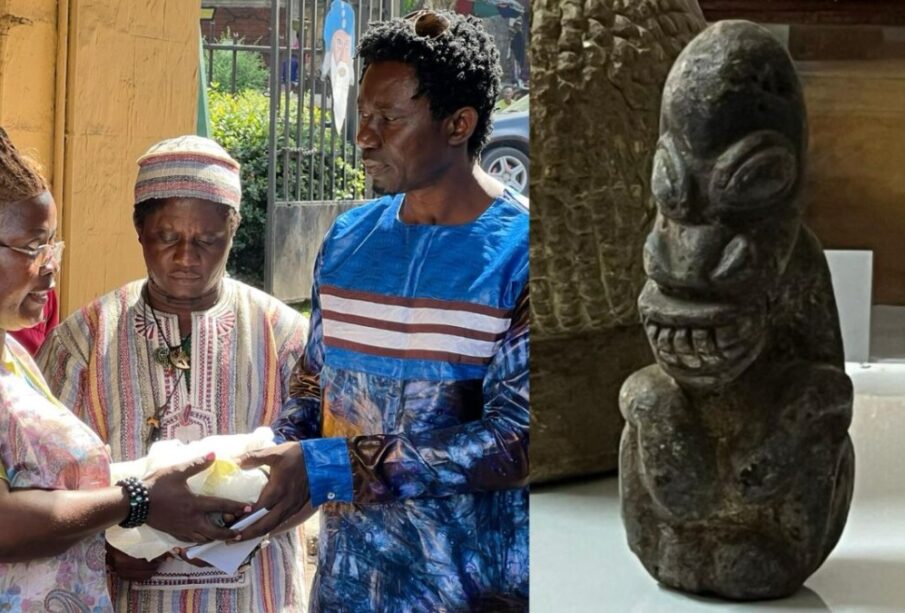
The Nomoli is a more than 10,000-year-old deity revered by the people of the Kissi and Mende tribes of Sierra Leone. It was handed over by Babah Tarawally, a Sierra Leonean writer and journalist based in the Netherlands, who helped in the repatriation of the artefact to Sierra Leone.

Image: Babah Tarawally (Right) Handing Over the Nomoli
Tarawally said, “I was excited to return a valuable part of our DNA,” as he handed over the Nomoli to the Sierra Leone National Museum.
Assistant Director of Culture, Ishmael Kamara, said, “We extend greetings from our ancestors,” he began, underscoring the deep lineage reconnected by the Nomoli’s return.
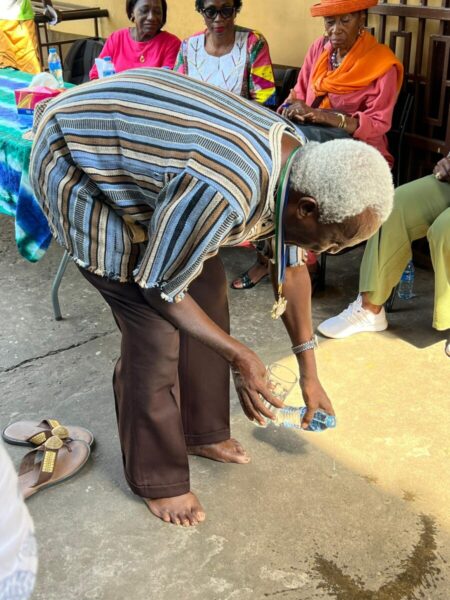
Image: Chief Matthew Jiabao Young Pouring Libation
A ceremony was held by Chief Matthew Jiabao Young, Mende Tribal Head for the Western Area, who poured a libation to the ancestors to welcome the Nomoli.
What is the Nomoli
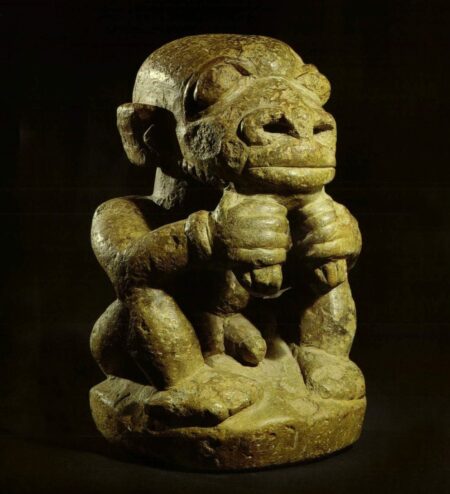
Image: A Nomoli
A Nomoli is an ancient deity primarily from Sierra Leone’s Kissi and Mende tribes. Although the nomoli’s exact age is unknown, it is one of the oldest Artefacts from West Africa, dating thousands of years ago.
The Nomoli holds varied spiritual significance for the Kissi and Mende peoples, serving as a means to invoke protection, good fortune, and positive outcomes. The Kissi and Mende people believe the Nomoli brings good harvest and protects their crops if placed in the farm fields. It is also used by them to consult the greater deities.
Where Can the Nomoli Be Found
The Nomoli artefact is traditionally associated with the Kissi and Mende people, who mainly reside in the southern and southeastern regions of Sierra Leone.
Whilst some believe a nomoli is just a carved wooden figure that can be carved by anyone, the Kissi and Mende people believe otherwise. According to the beliefs of the Kissi and Mende people, the Nomoli is a divine and spiritual deity that chooses its owner by the will of the greater gods.
Historically and traditionally, the Nomoli would appear to its destined owner either in the farm while tilling the ground, during diamond digging, or on a casual stroll.
Before now, it could only be possessed when the gods chose you, and came in different forms and shapes. Some nomolis come with a child on their backs, some pregnant, some come sitting, some standing, and some come with just their head.
Why is the Nomoli Important to Sierra Leone
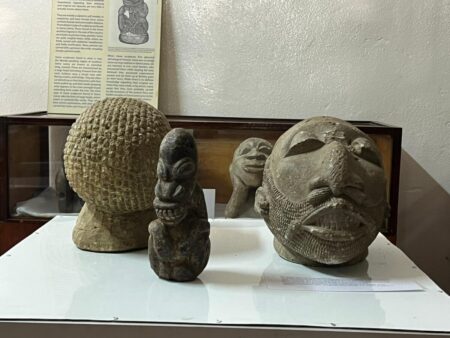
Image: The Nomoli repatriated from the Netherlands
Existing before the periods of colonial rule and the slave trade, the Nomoli served as a means of communication with ancestral powers and higher beings.
During pre-colonial Sierra Leone, the Nomoli artefact was used by Sierra Leoneans to ask for protection for their farms and to pray for good tidings.
In some parts of Sierra Leone, it is believed that when a chief dies, his spirit enters a nomoli, and he will be buried with the nomoli for a safe passage to the afterworld.
In Mende, the nomoli buried with chiefs are called “Mahe Yafei,” which means “spirits of the chiefs.”
The artefact plays a great role in Sierra Leone’s cultural and traditional beliefs, specifically that of the Kissi and Mende people, who hold a huge piece of the history of Sierra Leone.





-
Mercury International Pays Out Le20 Million to 30,000 Winners
Mercury International, Sierra Leone’s largest sports and lotto betting company, on Monday, ... -
-
-