America Could Place Sierra Leone on a $15,000 Visa Bond
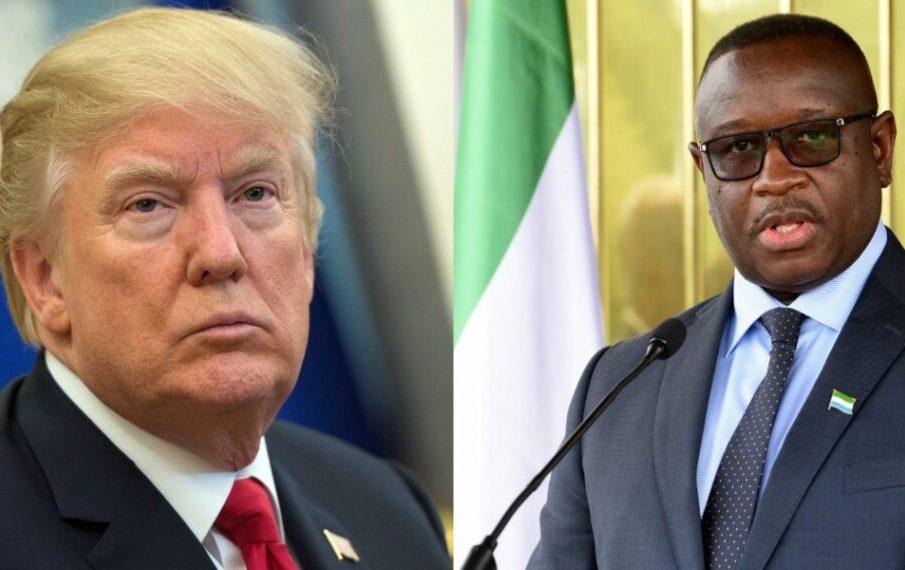
The United States has announced an expanded visa bond program applicable to 38 countries, with more than half being African nations, effective January 21 2026.
The visa bond program requires travellers to post a refundable bond of between $5,000 and $15,000 before being issued a U.S. B1/B2 (business or tourist) visa.
Under the programme, consular officers may require applicants from the listed countries to deposit a bond before a visa is granted.
The bond, which translates to cash, is refundable only if the traveller fully complies with U.S. immigration rules, particularly by leaving the country before their visa expires, but paying a visa bond does not guarantee visa approval.
African Countries Affected
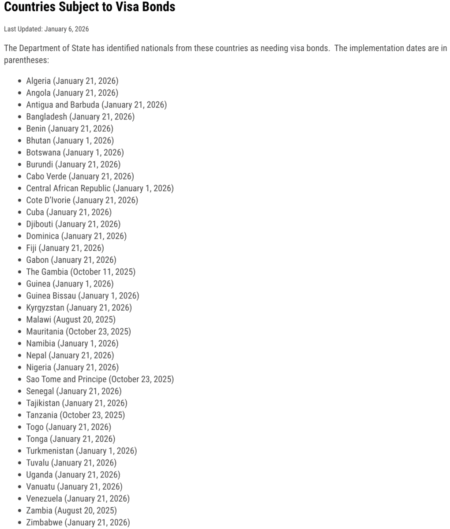
Image: List of Countries Affected by the Expanded Visa Bond Program
The countries affected span Africa, Asia, the Caribbean and the Pacific, with most of the affected countries being African countries. Nearly half of the entire African continent is affected by the Trump administration’s new visa bond.
With Algeria, Angola, Benin, Botswana, Burundi, Cabo Verde, Central African Republic, Djibouti, Gabon, The Gambia, Guinea, Guinea-Bissau, Malawi, Mauritania, Namibia, Nigeria, São Tomé and Príncipe, Senegal, Tanzania, Togo, Uganda, Zambia, Zimbabwe, and Côte d’Ivoire – all affected.
What Does This Mean for Sierra Leone
On December 16, 2025, the US President Donald J. Trump expanded the list of countries to be subject to a “travel ban.” Sierra Leone is on that list, which took effect on January 1, 2026.
While Sierra Leone is not currently on the recent visa bond list, with Trump’s undying love for “Make America Great Again” by “declaring a war on illegal immigration,” Sierra Leone could still face a similar fate in the future, even if visa-related restrictions are eased or removed.
Trump’s exclusion of Sierra Leone from his new visa bond list offers no long-term guarantee. With several West African countries already affected, and by extension, neighbouring Guinea-Conakry is in the list, Sierra Leone could be added in future expansions of the programme, given its high visa overstay rate.
How Will This Affect Sierra Leoneans If Applied
According to a 2025 survey by Afrobarometer, six in ten Sierra Leoneans want to leave Sierra Leone for abroad to find “employment opportunities” and “escape poverty.”
If applied to Sierra Leone, the policy could significantly increase the cost of U.S. travel, which will affect most youths, limit business, educational and family exchanges, and discourage legitimate travel to the U.S. for greener pastures.
The policy could also have broader economic consequences, not just on individuals but also on airlines.
With more than 30 countries affected by the expanded program, it will reduce travel demand to the United States from affected countries, which would likely lead to a decline in passenger traffic to the United States.
The U.S. and international airlines will be impacted, with fewer flights and lower ticket sales. Airlines could go into financial losses with ripple effects across the global travel and aviation industry, affecting economies worldwide.



-
U.S Opens Fulbright Scholarship For Sierra Leonean Students
The United States Embassy in Freetown has on Monday, 23 February, 2026, ... -
-
-